May Bartram’s fatal illness
The Beast in the JungleMay Bartram’s fatal illness is the bodily crisis that ends her long companionship with John Marcher and exposes how poorly he has understood its meaning. As her health deteriorates, she becomes housebound; their final conversation brings his attention at last to what her devotion has cost her, but not soon enough to change the outcome.
The Illness and Its Signs
Before May names her fear, John notices an unfamiliar uncertainty in her health. He begins to dread losing her, though even this alarm is entangled with his preoccupation with the fate he has spent his life awaiting. He wonders whether her death might be the long-anticipated catastrophe, while recognizing that her mere loss would be an inadequate answer to his private riddle.
May eventually confesses that she fears a deep disorder in her blood. The account supplies no more precise diagnosis. It does, however, establish the illness as serious and progressive: May keeps the house, can no longer meet John elsewhere, and is increasingly unable to leave the deep old-fashioned chair beside her fire. Her physical decline makes visible a change that John had not previously been able to see in her, or in himself: after so many years, both are old, or nearly so.
Decline and Dependence
The illness alters the terms of their meetings. John must go to May rather than encounter her around London as he once did. After an absence longer than usual, he is startled by how old she looks, then understands that the apparent suddenness belongs to his own delayed perception. May’s failing body has brought the passage of years home to him through her condition rather than his own.
Her declining health also sharpens John’s fear of deprivation. He imagines her dying before she can see the outcome of the fate they have watched for, and considers how painful it would be for her to give up before that vision is accomplished. Yet his concern remains compromised by his own suspense: he repeatedly measures her danger against what her loss would mean for him and for the unresolved question that has organized his life.
The Final Conversation
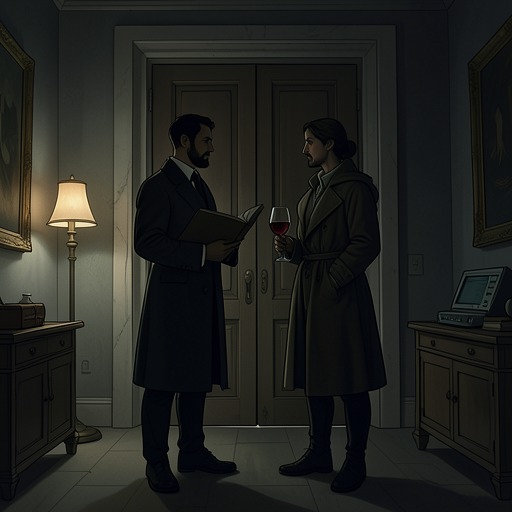
In their last conversation, May rings a bell near the chimney and sinks back, strangely pale. She tells John, “I'm afraid I'm too ill.” His first unspoken fear is that she will die before giving him the light he wants; he checks himself before voicing it. May responds as though she has heard the question nonetheless, asking, “Don't you know--now?” Her words turn the scene away from the information he expects and toward the knowledge she has borne.
When John begins to understand what her knowledge has meant to her, he asks whether she is dying of it. May watches him gravely, then tells him, “I would live for you still--if I could.” She closes her eyes briefly, as if making one last effort within herself, but raises them again to take leave of him. The illness leaves no time for the understanding John has reached to become a new life between them.
Death and Narrative Significance
After their final talk, John sees May no more. Access to her sickroom is almost entirely denied to him, and, as doctors, nurses, and relatives gather around her, he recognizes how little formal claim their intimacy gives him. At her funeral in a London cemetery, the small gathering does not treat him as especially close to the dead woman. Her illness thus culminates not only in death but in John’s sense of a double deprivation: he loses May and discovers that her devotion cannot be converted into a recognized place beside her.
The illness makes the contrast between their lives painfully concrete. May has spent herself attending to the possibility that John’s awaited fate would be revealed; he has mistaken that shared vigil for the center of their bond. Her physical decline forces the possibility of losing her into view, but his recognition of her love arrives only as she is leaving him. In this way, the illness ends their companionship and exposes the human cost of the suspense that has kept John from fully seeing the life already beside him.